


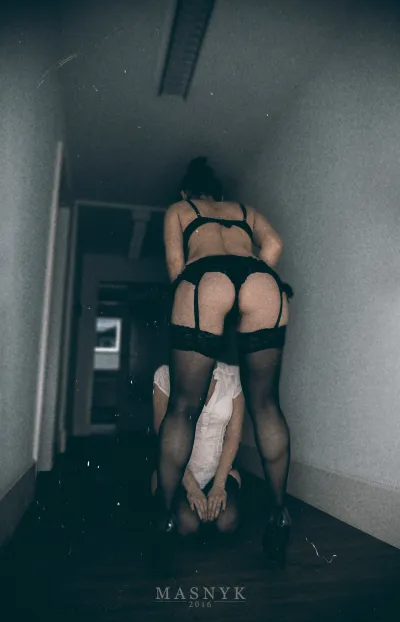
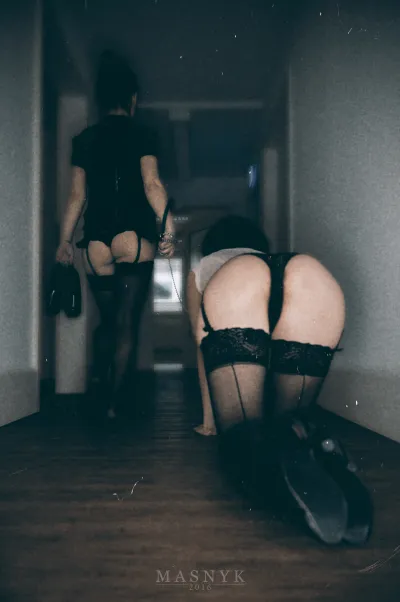
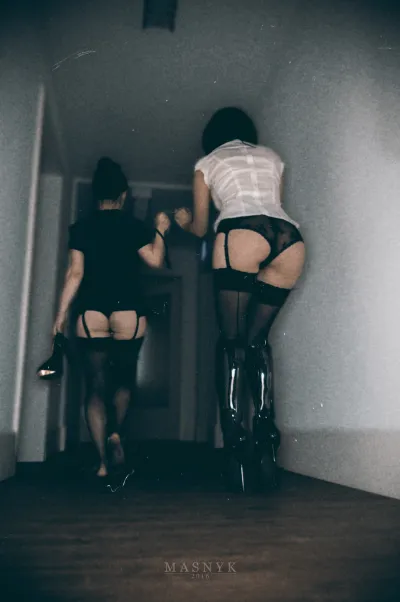
This photograph tells a story of tension, in which domination is not a gesture of violence, but a conscious form of dialogue between two women. At the center remains a power relationship understood as a psychological role-play, based on trust, control and precisely defined boundaries. Culturally, it's a reversal of established patterns, similar to those we know from pop culture, when powerful female protagonists take over the narrative and rules of the game. Domination is sometimes a costume, sometimes a uniform, sometimes just elegant lingerie, but always a sign of decision, not chance. Here, too, dress and gesture are the language used to tell the story of position, responsibility and control of the situation.
Socially, this is a depiction of a relationship in which roles are negotiated rather than imposed, closer to contemporary discussions of power and agency than simple force-weakness schemes. The aesthetics of the frame are reminiscent of scenes from movies or TV series, in which tension is built with gaze and silence rather than action. Domination becomes a form of composition, and composition becomes the language of emotion. In this silence one can see concentration and conscious building of relationships, as in a well-written dialogue, where every pause has meaning. This is a painting about control that does not destroy, but organizes the space between two people. About a role that does not take away dignity, but redefines it. And about a force that can be tough and subtle at the same time. The result is a portrait of tension that is more mental than physical, set in a culture that increasingly asks who really holds the helm of the narrative. The picture leaves the viewer asking where power ends and consensus begins.

Assistant


