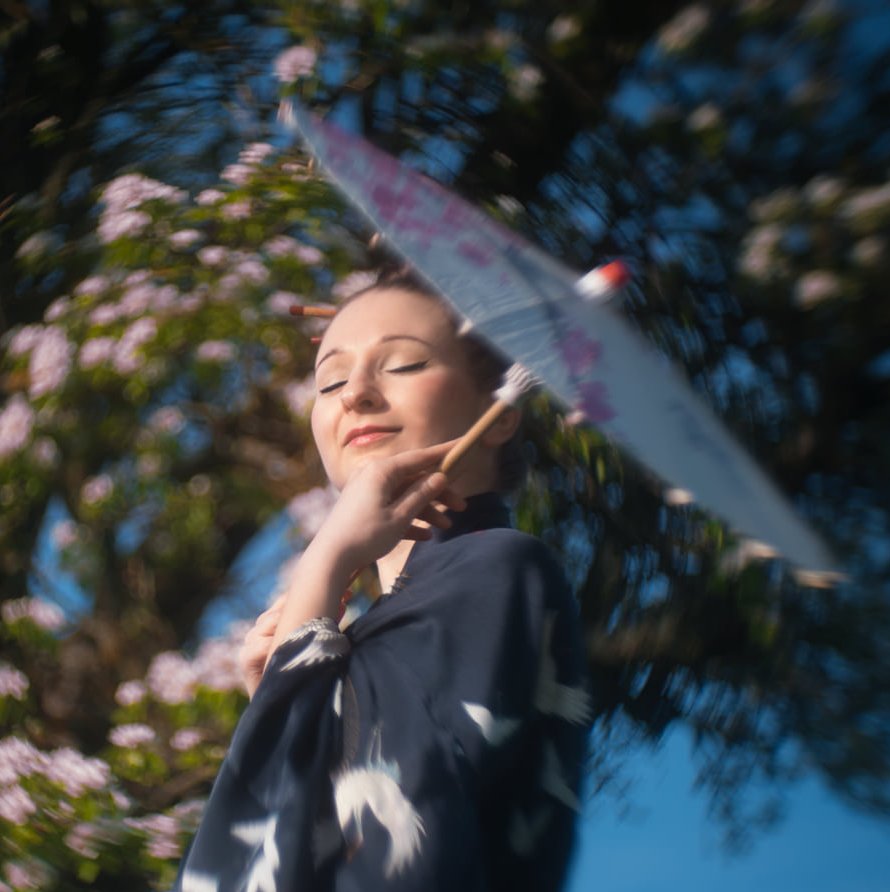


The cherry blossom season, known as sakura or hanami, is one of the most poetic phenomena in Japanese culture, deeply rooted in its aesthetics and perception of the world. From late March to early May, depending on the region, the landscape transforms into a delicate sea of white and pink, attracting people hungry for light, color and a brief moment of beauty.
The cherry blossom has for centuries symbolized the transience of life, the fragility of existence and the inevitability of passing. That brief moment of full bloom, after which the petals fall almost as quickly as they appeared, reminds us of the impermanence of all things material and the value of the present moment. This thought is strongly associated with the Japanese concept of mono no aware - a sensitivity to the beauty of transient things and the quiet melancholy that accompanies their disappearance.
Hanami, or "flower watching," is not only a tradition, but also a way of experiencing spring. It's walks among the trees, moments of pause, conversation and contemplation of nature. Photography has always tried to capture this moment - the soft light, the softness of colors, the subtlety of form. It is this mood that became the starting point for this session.
Although Japan remains a source of inspiration, this time we did not travel to the other side of the world. We wanted to see if a similar vibe could be found and recreated here, locally. This photo shoot in Eberbach was born out of a need to capture the spring light, tranquility and that special quiet that comes between winter and full summer. It turned out that Eberbach can be surprisingly subtle, soft and poetic - just by looking carefully.
As a photographer in Eberbach, I often look not only for subjects, but also for moods. This day was not about literally copying Japanese aesthetics, but trying to translate them into the local language of light, space and emotion. We wanted to create images that are more a state of mind than a document of a place - a bath in the sun, a calm, a moment suspended outside of time.
This session shows that you don't have to go far away to tell visual stories. Sometimes all you need is familiar surroundings, the right light and attention. Here, Eberbach became not just a background, but a full-fledged part of the story - quiet, unobtrusive, but very much present.

Assistant