
In the Black Forest, there are places that still feel distant and inaccessible. Entire abandoned complexes once built into wooded hillsides, now slowly disappearing beneath the very forest that is reclaiming them. A closed circle of nature. For a moment, people carve out a space for themselves, build walls, roads and rooms — and then they leave. The forest never does.
The location was so remote that we had almost no idea what we would find there. We relied entirely on maps and a few scattered, fragmentary descriptions. Where the road ended, we had to leave the car behind and continue on foot. All the equipment on our backs, a warm afternoon, and a strange fracture running alongside the path: on one side, the silence of walls and ruins; on the other, the almost shameless song of a living forest.
The first quarter of an hour belonged to exploration. Corridors. More corridors. Floors, rooms, passageways leading into further passageways. After a while came the first problems with orientation — that peculiar moment familiar from bad dreams, when you are absolutely certain you have already been here, yet cannot say when or from which direction.
Only at the very end, when it seemed the building had nothing more to show us, did we notice a small broken-open door. So low that it was difficult to stand upright in the opening. Looking behind it felt almost like a formality. We expected a small storage room, perhaps some kind of technical space.
Instead, there were stairs.
Narrow, wooden, winding upward.
First came the careful testing of the boards with the sole of a shoe. One. Then another. They held. We could continue.
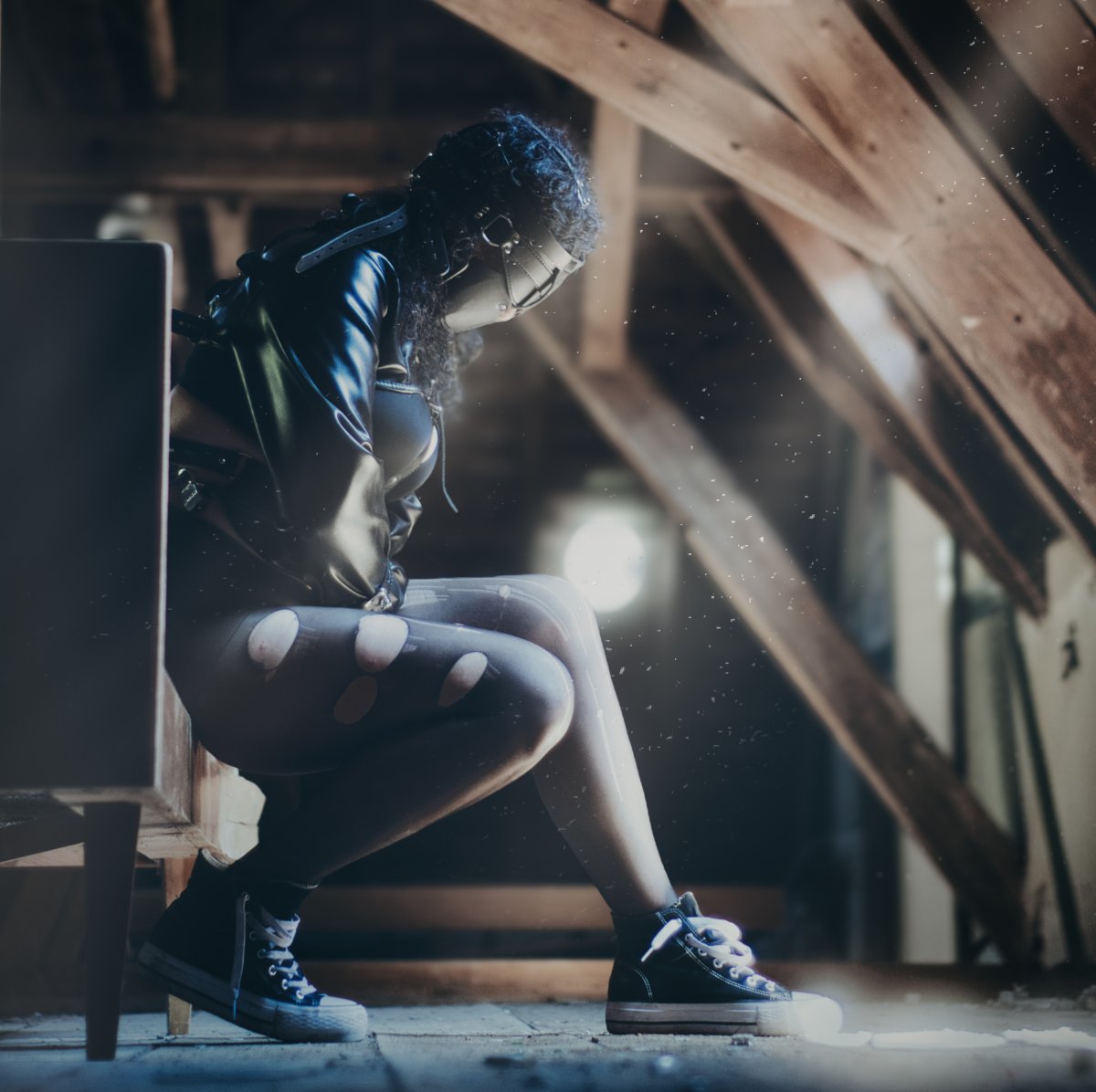
That unremarkable little door turned out to be a portal into an entirely different world. One floor higher, an enormous, almost cathedral-like attic opened before us. Wooden beams and ribs vanished high overhead, forming a structure that felt less like architecture and more like the inside of some vast, sleeping organism. Light entered through a few narrow openings, cut through the dust and broke apart in the air into long, motionless pillars.
We hardly needed to discuss it.
This was our place.
At last, we could drop the heavy backpacks.
The concept already existed. All we had to do was allow the space to reshape it.
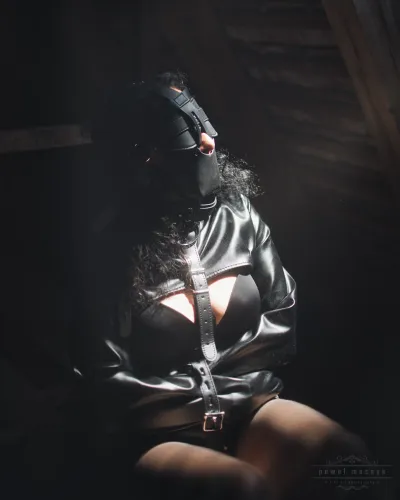
Sensory deprivation. Complete dependence. Taking away the possibility of orientation and leaving only one simple way of remaining in contact with the world.
Light.
Up there in the attic, I did not merely see it. It seemed almost physical, something that could be felt on exposed skin. And skin was meant to become the final sense left untouched.
Beneath the mask and blindfold, space ceased to exist. There was darkness. Silence. No points of reference.
A few uncertain steps were enough to transform the vast attic into something entirely different from what it had been moments before. Without sight and without the ability to move freely, you no longer know whether the nearest wall is one metre away or ten. Whether someone is standing beside you. Whether you have been left alone. A vast space no longer offers freedom. Quite the opposite — it takes it away.
What remains is dust suspended in the light. Warmth on exposed skin. Wood beneath the feet. Silence.
And someone’s hand that knows where it is leading you.
We’ll place you beneath the window.
Here.
Enjoy the sun.
This will be your place.

Assistant

